
Lifestyle Medicine Pillars: Nutrition
June 15, 2026
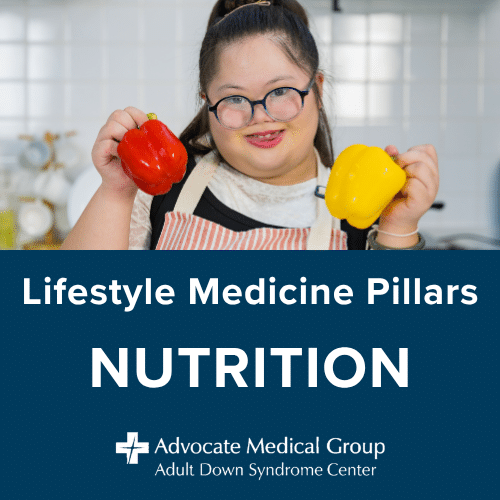
As described in our article Lifestyle Medicine for Adolescents and Adults with Down Syndrome, nutrition is one of the pillars of lifestyle medicine identified by the American College of Lifestyle Medicine.
Why work on improved nutrition?
Benefits can include:
- Better fuel for the body
- Improved hydration
- Better mental health and possibly slowed cognitive decline
- Prevention or better control of conditions like type 2 diabetes
- Improved weight management (overweight and obesity are more common in people with Down syndrome)
What is optimal nutrition for adolescents and adults with Down syndrome?
This is a question of ongoing study. Studies have not demonstrated one single “best” diet for people with Down syndrome.
What are ways to eat a healthy diet?
Diets such as the DASH, Mediterranean, MIND, and anti-inflammatory diets all have benefits.
Some general guidelines include:
See the Resources section below for articles and visuals with additional information about healthy eating.
Examples of goals
I will fill 1/2 my plate for dinner with fruits and vegetables at least 4 times per week for the next month. I will record it on my calendar when I do it.
I will drink a glass of water with each meal 5 days per week.
Resources
Adult Down Syndrome Center
Lifestyle Medicine for Adolescents and Adults with Down Syndrome
Ways to Eat More Green Vegetables
All Nutrition and Hydration Resources
General
About Lifestyle Medicine (American College of Lifestyle Medicine)
Anti-Inflammatory Diet (Johns Hopkins)
DASH Diet (National Institutes of Health)
How to Understand and Use the Nutrition Facts Label (U.S. Food and Drug Administration)
Mediterranean Diet (Cleveland Clinic)
MIND Diet (Cleveland Clinic)
Ultra-Processed Foods (Johns Hopkins)
References
Morris MC, Tangney CC, Wang Y, et al. MIND diet slows cognitive decline with aging. Alzheimers Dement. 2015;11(9):1015-1022. doi:10.1016/j.jalz.2015.04.011
Yu X, Pu H, Voss M. Overview of anti-inflammatory diets and their promising effects on non-communicable diseases. Br J Nutr. 2024;132(7):898-918. doi:10.1017/S0007114524001405
Join our mailing list
Sign up to receive emails with information on health topics for teens and adults with Down syndrome, updates on research and education as well as information about upcoming events, classes and programs.