
Lifestyle Medicine Pillars: Stress Management
June 15, 2026
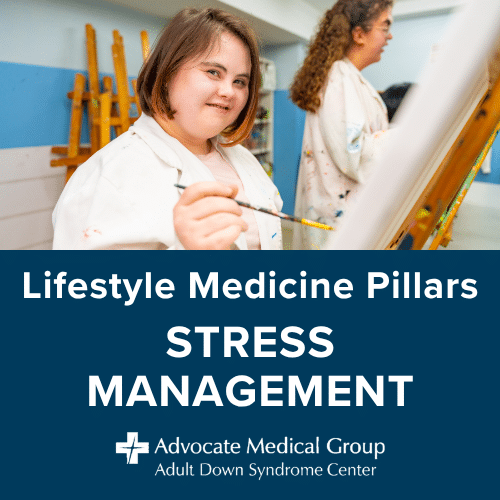
As described in our article Lifestyle Medicine for Adolescents and Adults with Down Syndrome, stress management is one of the pillars of lifestyle medicine identified by the American College of Lifestyle Medicine.
What is stress?
Acute stress is the body’s natural response to a challenge or threat. It should go away after the challenge or threat passes.
Chronic stress occurs when a person consistently feels pressured and overwhelmed over a long period of time. It can cause a variety of mental and physical health problems.
Why is managing stress important?
Potential benefits of managing stress include improved:
- Mental health
- Memory and concentration
- Sleep
- Immune function and control of chronic diseases
Do adolescents and adults with Down syndrome need to manage stress?
A common misperception is that people with Down syndrome do not experience stress or do not have stress in their lives. People with Down syndrome feel stress like everyone else. Their stress “triggers” – what causes their stress – may be different than the stress triggers of someone without Down syndrome. However, many factors (not just Down syndrome) can affect what situations cause a person to feel stressed.
What are ways to manage stress?
Ways to prevent or improve chronic stress include:
Examples of goals
For the next 2 weeks, I will practice my breathing exercises for 5 minutes a day.
For the next month, I will write at least 1 good thing about my day in my journal before I go to bed.
Resources
Adult Down Syndrome Center
Lifestyle Medicine for Adolescents and Adults with Down Syndrome
Mental Wellness in Adults with Down Syndrome (2nd Edition)
Navigating Transitions: Practical Strategies for Success Webinar Recording
Tips for Dealing with Stress Video
General
About Lifestyle Medicine (American College of Lifestyle Medicine)
Chronic Stress (Yale Medicine)
References
Scott A, Gould R, Quidore L, et al. Stress, anxiety and coping in adults with Down syndrome: An exploratory co-research study. J Appl Res Intellect Disabil. 2025;38(1):e13311. doi:10.1111/jar.13311
Join our mailing list
Sign up to receive emails with information on health topics for teens and adults with Down syndrome, updates on research and education as well as information about upcoming events, classes and programs.