
Lifestyle Medicine Pillars: Social Connection and Social Skills
June 15, 2026
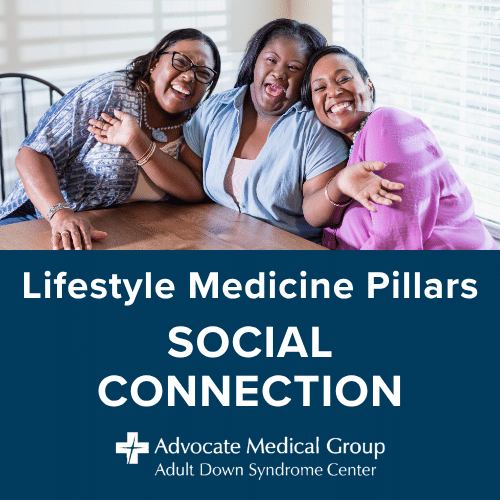
As described in our article Lifestyle Medicine for Adolescents and Adults with Down Syndrome, social connection is one of the pillars of lifestyle medicine identified by the American College of Lifestyle Medicine. We often add social skills to the social connectedness pillar. We have found that learning social skills can lead to greater success in the other pillars, particularly social connections.
What are the benefits of social connection?
Social connection can:
- Reduce anxiety and depression
- Slow cognitive decline
- Improve emotional well-being and empathy
- Support self-confidence and self-esteem
- Lower the risk of chronic diseases like diabetes, heart disease, and obesity
- Help people live longer by improving health and lowering inflammation in the body
Why do we link social connection and social skills?
Connecting with other people supports good health. Sadly, research has shown that loneliness affects over 40% of people with intellectual disabilities (Llorens-Roman, 2026). Developing and maintaining social skills can improve our ability to connect with others. Social skills can also boost self-esteem, allow for greater participation in a variety of activities, and promote increased independence.
See the Resources section below for social skills articles, visuals, and videos.
What are ways to increase social connections?
Social connections can be made through:
- Family activities
- Down syndrome organizations
- Book clubs such as Next Chapter Book Club
- Theater programs
- Art programs
- Special Olympics
- Park districts and special recreation associations
- Best Buddies (adults can participate in Best Buddies Citizens and eBuddies)
- Religious organizations
- Paid jobs
- Volunteering
- Staying connected via Zoom, FaceTime, etc.
Examples of goals
For the next month, I will FaceTime a friend at least 1 time per week.
I will volunteer at the food pantry 2 times per month for the next 3 months.
Resources
Adult Down Syndrome Center
Importance of Social Skills for Optimizing Health
Lifestyle Medicine for Adolescents and Adults with Down Syndrome
Mental Wellness in Adults with Down Syndrome (2nd Edition)
My Rules for Conversations Visual
Visuals About Developing and Maintaining Friendships
General
About Lifestyle Medicine (American College of Lifestyle Medicine)
References
Holt-Lunstad J. Social connection as a critical factor for mental and physical health: Evidence, trends, challenges, and future implications. World Psychiatry. 2024;23(3):312-332. doi:10.1002/wps.21224
Llorens-Roman J, Pousada M, Gómez-Zúñiga B. Loneliness and its associated factors in individuals with intellectual disability and borderline intellectual functioning: A systematic review. J Appl Res Intellect Disabil. 2026;39(2):e70224. doi:10.1111/jar.70224
Martino J, Pegg J, Frates EP. The connection prescription: Using the power of social interactions and the deep desire for connectedness to empower health and wellness. Am J Lifestyle Med. 2015;11(6):466-475. doi:10.1177/1559827615608788
Samtani S, Mahalingam G, Lam BCP, et al. Associations between social connections and cognition: A global collaborative individual participant data meta-analysis. Lancet Healthy Longev. 2022;3(11):e740-e753. doi:10.1016/S2666-7568(22)00199-4
Stokes JE, Waldron DA, Stam EJ. Loneliness among adults aging with intellectual and developmental disabilities: The importance of living situation. Gerontologist. 2025;65(4):gnaf031. doi:10.1093/geront/gnaf031
Yang YC, Schorpp K, Harris KM. Social support, social strain and inflammation: Evidence from a national longitudinal study of U.S. adults. Soc Sci Med. 2014;107:124-135. doi:10.1016/j.socscimed.2014.02.013
Join our mailing list
Sign up to receive emails with information on health topics for teens and adults with Down syndrome, updates on research and education as well as information about upcoming events, classes and programs.