
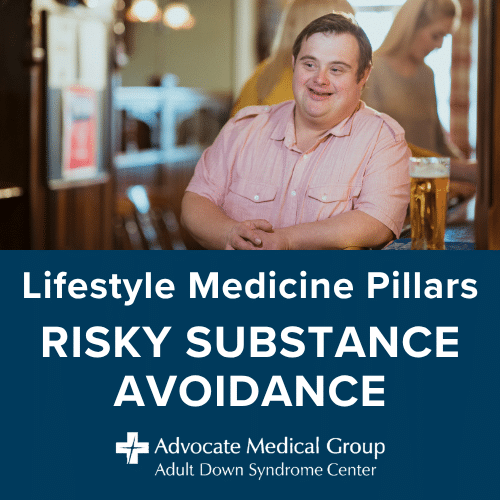
As described in our article Lifestyle Medicine for Adolescents and Adults with Down Syndrome, risky substance avoidance is one of the pillars of lifestyle medicine identified by the American College of Lifestyle Medicine.
In our clinic, using risky substances (cigarettes, alcohol, drugs) is not common, but we are seeing a small increase. As opportunities to gain greater independence have increased over the years, so has access to risky substances. To support people with Down syndrome in making informed choices, we encourage early guidance, clear education, and ongoing reminders about risks.
Alcohol
What are the alcohol guidelines for the population as a whole?
For alcohol consumption, recent studies say, “the less the better” (Snetselaar, 2021). No amount of alcohol is considered completely safe.
If someone chooses to drink alcohol, the most consumption recommended is:
- Men: up to 2 drinks in a day
- Women: up to 1 drink in a day
Standard drink sizes in the United States:
- Beer: 12 oz
- Table wine: 5 oz
- 80-proof spirits: 1.5 oz
This is considered moderate alcohol use.
What is known about alcohol use in people with Down syndrome?
There is limited research on alcohol safety in people with Down syndrome. Reasons for extra caution include:
- Alcohol can harm the brain, speed up cognitive decline, and increase dementia risk in the non-Down syndrome population. This could be of particular concern for people with Down syndrome, who already face early cognitive aging.
- Alcohol can have a negative effect on several conditions that are more common in people with Down syndrome, such as type 1 and type 2 diabetes, hypothyroidism, sleep apnea, metabolic dysfunction-associated steatotic liver disease (MASLD, fatty liver), and obesity.
- Due to having an intellectual disability, limited expressive language skills, and challenges with executive functioning, some people with Down syndrome may have more difficulty understanding safe drinking limits, recognizing intoxication, or communicating problems related to alcohol use.
- Problematic alcohol consumption is less common in people with intellectual disabilities (likely because fewer people with intellectual disabilities drink any alcohol). However, people with intellectual disabilities who do drink alcohol have a greater risk of developing problematic drinking than people without an intellectual disability (Fulda, 2026).
Cigarettes and other drugs
There is little research on cigarette use in Down syndrome. People with Down syndrome are more likely to get respiratory (lung) infections, including severe infections. Smoking raises the risk even more and is very likely to contribute to greater health problems in people with Down syndrome. This is a strong reason to avoid smoking.
There is also limited information about drug use in Down syndrome. However, like alcohol and tobacco, there are reasons to avoid use of other drugs including:
- Potential for greater negative effects on the nervous system
- Possibility of worsening a variety of medical and mental health conditions that are more common in people with Down syndrome
- Limited research on drug use by people with Down syndrome
Example of goal
For the next 2 months, I will drink no more than 2 alcoholic beverages at social events.
Resources
Adult Down Syndrome Center
Lifestyle Medicine for Adolescents and Adults with Down Syndrome
Metabolic Dysfunction-Associated Steatotic Liver Disease (“Fatty Liver Disease”)
General
About Lifestyle Medicine (American College of Lifestyle Medicine)
References
Barrett N, Paschos D. Alcohol-related problems in adolescents and adults with intellectual disabilities. Curr Opin Psychiatry. 2006;19(5):481-485. doi:10.1097/01.yco.0000238474.07078.41
Fulda KG, Walters ST, Barnett TE, et al. Substance use disorder among people with intellectual and developmental disabilities: A narrative review. Am J Drug Alcohol Abuse. 2026;52(1):18-32. doi:10.1080/00952990.2025.2603241
Snetselaar LG, de Jesus JM, DeSilva DM, Stoody EE. Dietary guidelines for Americans, 2020-2025: Understanding the scientific process, guidelines, and key recommendations. Nutr Today. 2021;56(6):287-295. doi:10.1097/NT.0000000000000512
Join our mailing list
Sign up to receive emails with information on health topics for teens and adults with Down syndrome, updates on research and education as well as information about upcoming events, classes and programs.