
Folliculitis and Boils in People with Down Syndrome
February 1, 2021
Overview
Folliculitis and boils are two skin conditions that are more common in people with Down syndrome than in people without Down syndrome. The article below describes these conditions, how they are diagnosed and treated, and strategies to prevent them.
What are folliculitis and boils?
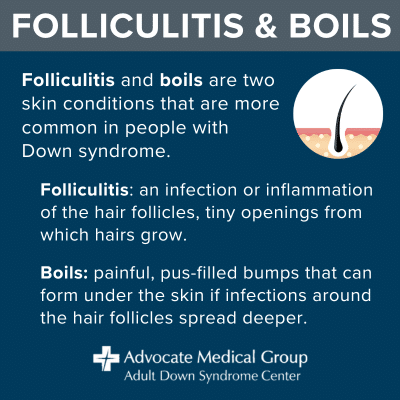
Folliculitis is an infection or inflammation of the hair follicles (the tiny openings from which hairs grow) caused by bacteria or sometimes fungi. Small red bumps or white pimples may appear on the skin, and these can be itchy, tender, and/or swollen. Folliculitis can occur wherever there is hair on the body, but it is commonly experienced on the face, back, and chest.
When infections around the hair follicles spread deeper, boils can occur. Boils are painful, pus-filled bumps that form under the skin. Common sites where boils appear are the armpits, groin area, buttocks, thighs, and along the waist band or bra line.
What can you do to prevent folliculitis and boils?
Some steps that may be helpful in preventing folliculitis and boils and promote good skin health overall are listed below.
- To decrease bacterial load on the skin:
- Gently wash the skin with antibacterial soaps such as Lever 2000 or Dial Soap once or twice each day. Another option is Hibiclens, an antibacterial and antimicrobial skin cleanser. PanOxyl, a daily cleansing wash with benzoyl peroxide, is also an option (note: the benzoyl peroxide can leave stains on towels and fabrics).
- A loofah sponge or a brush on a long handle can be helpful, especially for washing hard-to-reach areas.
- Rinse the skin with water and then dry thoroughly. After bathing or showering, we recommend gently towel drying and then using a hair dryer on a cool setting on areas prone to folliculitis or boils.
- Some dermatologists recommend soaking two times per week in a bathtub with water plus 1/4 cup of bleach for 5 minutes. It is important to prevent the water from coming into contact with the face, especially the eyes, nose, and mouth. Additionally, bathing with bleach can irritate sensitive skin. It can also dry out skin. Moisturizing with lotion and/or cream is recommended, particularly because these cleansing methods can increase dry skin.
- Apply baby powder to areas prone to folliculitis or boils to keep the areas dry and reduce friction with clothing and other materials.
- Zinc supplement. Studies have provided differing results on whether an oral zinc supplement reduces the frequency or severity of infections and/or improves immune function in people with Down syndrome. A low zinc level has been reported to occur in people with Down syndrome. A daily supplement of 50 mg of elemental zinc (220 mg of zinc sulfate) can be considered.
- For individuals who have severe and recurrent boils, taking a daily antibiotic such as amoxicillin or tetracycline may be helpful.
What treatments are recommended?
- When a boil first appears, apply heat to allow the body’s natural defenses aid in ridding infection. We recommend sore muscle heat patches such as ThermaCare because they stay warm for 8 hours or more and do not need to be plugged in (like a heating pad) or warmed in the microwave.
- When a boil occurs and may open or is open, apply a triple antibiotic cream, such as Neosporin, and cover with a bandage. This keeps the area clean and helps minimize scarring.
- If the boil is painful, a topical cream such as Boil-Ease (which contains 20% benzocaine) can be used to reduce discomfort. Acetaminophen (Tylenol) or ibuprofen (Advil) can also be taken.
- If a boil is extremely painful, the individual has a fever, or swelling and redness extend, the boil should be examined by a healthcare professional, as these are signs that there may be spreading infection. The boil may need to be drained. A course of oral antibiotics may also be prescribed. Infrequently, hospitalization and IV antibiotics become necessary.
Are folliculitis and boils related to hidradenitis suppurativa?
Hidradenitis suppurativa is also a skin condition but it is usually even more severe than folliculitis and boils. Some experts have written that they are separate conditions with different causes and different severities. Other experts think folliculitis, boils, and hidradenitis suppurativa are parts of the same condition with hidradenitis suppurativa being the most severe form. Additional information is available in this Down Syndrome and Hidradenitis Suppurativa (HS) handout from The Society for Pediatric Dermatology.
Resources
Down syndrome
Down Syndrome and Folliculitis (The Society for Pediatric Dermatology)
Down Syndrome and Hidradenitis Suppurativa (The Society for Pediatric Dermatology)
All Skin, Hair, and Nails Resources (Adult Down Syndrome Center)
General
Folliculitis, Boils, and Carbuncles (Johns Hopkins Medicine)
Folliculitis (Mayo Clinic)
Boils and Carbuncles (Mayo Clinic)
References
Licastro F, Chiricolo M, Mocchegiani E, et al. Oral zinc supplementation in Down’s syndrome subjects decreased infections and normalized some humoral and cellular immune parameters. J Intellect Disabil Res. 1994;38 ( Pt 2):149-162. doi:10.1111/j.1365-2788.1994.tb00370.x
Romano C, Pettinato R, Ragusa L, Barone C, Alberti A, Failla P. Is there a relationship between zinc and the peculiar comorbidities of Down syndrome?. Downs Syndr Res Pract. 2002;8(1):25-28. doi:10.3104/reports.126
Join our mailing list
Sign up to receive emails with information on health topics for teens and adults with Down syndrome, updates on research and education as well as information about upcoming events, classes and programs.