
Divorce: Helping a Person with Down Syndrome Through the Change
April 2, 2026
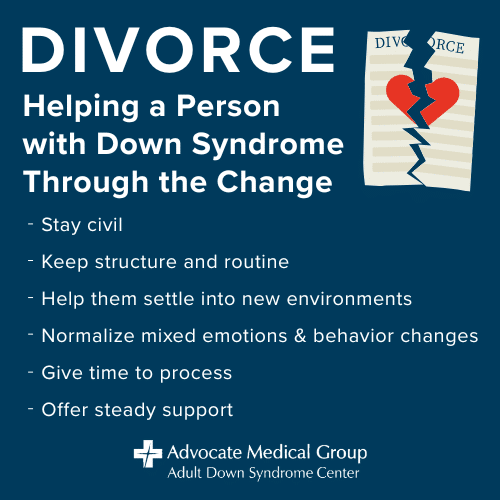
Divorce can be challenging for individuals with Down syndrome and their families. It often brings stress, big changes, and grief. The tips below can help you support a person with Down syndrome to navigate this change.
- Continue attending school, going to work, participating in activities, and spending time with friends.
- Use a simple calendar or visual schedule that shows where and with whom they will be each day.
- Prepare the person for potential changes to the schedule.
- Create clear, consistent routines in each home.
- Bring comfort items (favorite blanket, pillow, photos) to the new environment.
- Involve them in setting up the new space – choosing bedding, arranging furniture, or picking wall decorations.
- Allow time for the person to adjust.
- Acknowledge the fact that divorce may contribute but do not excuse unsafe or hurtful behavior.
- Respond with empathy while keeping clear, simple rules about appropriate behavior.
- Be patient and give simple, consistent answers.
- Be ready to revisit the conversation when they need to.
- Accept their unique timeline for processing.
- Listen without judgment and encourage them to share their feelings.
- Remind them the divorce is not their fault.
- Consider seeking support from a therapist, counselor, or other professional to help with navigating this transition.
Resources
Concrete Thinking in People with Down Syndrome
Coping with Divorce: A Visual Story
Finding a Mental Health Professional
Individualized Visual Schedules
Resources on Healthy Ways to Manage Stress and Strong Emotions
Join our mailing list
Sign up to receive emails with information on health topics for teens and adults with Down syndrome, updates on research and education as well as information about upcoming events, classes and programs.